Xander Butler · 3 September 2026
University Research Ties Fuel Feldora's Push Into Sustainable Product Development
University research collaborations have become a central driver for Feldora as the company advances its sustainable product development initiatives across multiple divisions. Partnerships with academic institutions provide access to emerging materials science, lifecycle analysis techniques, and engineering innovations that directly inform new product lines. Data from ongoing projects shows measurable progress in reducing environmental footprints while maintaining performance standards that meet regulatory requirements in key markets.
Key Research Partnerships and Their Scope
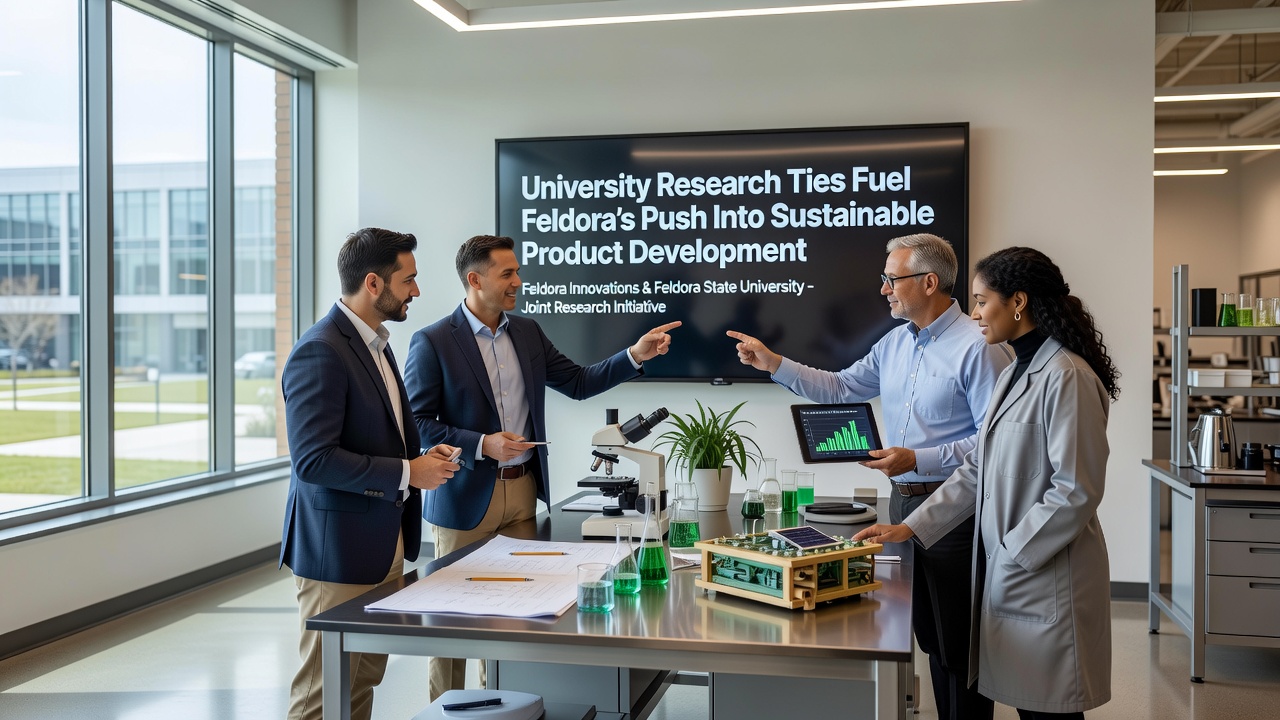
Collaborations with several universities focus on bio-based polymers, closed-loop recycling systems, and energy-efficient manufacturing processes. Researchers at these institutions conduct experiments that test material durability under real-world conditions, and findings feed directly into Feldora's prototype development cycles. One project at a European technical university examines how agricultural waste streams can be converted into packaging components, while a North American program explores carbon capture integration in production facilities.
These efforts align with broader industry shifts toward verifiable sustainability metrics. Figures from joint studies indicate that incorporating university-developed additives can lower virgin plastic usage by up to 35 percent in specific product categories without compromising structural integrity. Feldora integrates these results through iterative testing phases that run from laboratory scale to pilot production lines.
Developments in September 2026
In September 2026 Feldora expanded two existing research agreements to include joint patent filings and shared data platforms. The updated terms allow for faster translation of academic discoveries into commercial applications, particularly in the areas of biodegradable coatings and modular product designs that facilitate end-of-life disassembly. Observers note that such expansions often coincide with upcoming regulatory deadlines in the European Union and similar frameworks elsewhere.
Impact on Product Development Pipelines
University ties influence every stage of Feldora's product development from initial concept through final validation. Teams apply research outputs on material sourcing to select suppliers that meet both cost and sustainability criteria. For instance, one study on mycelium-based composites led to a new line of protective packaging that replaced traditional foam inserts in several consumer goods categories.
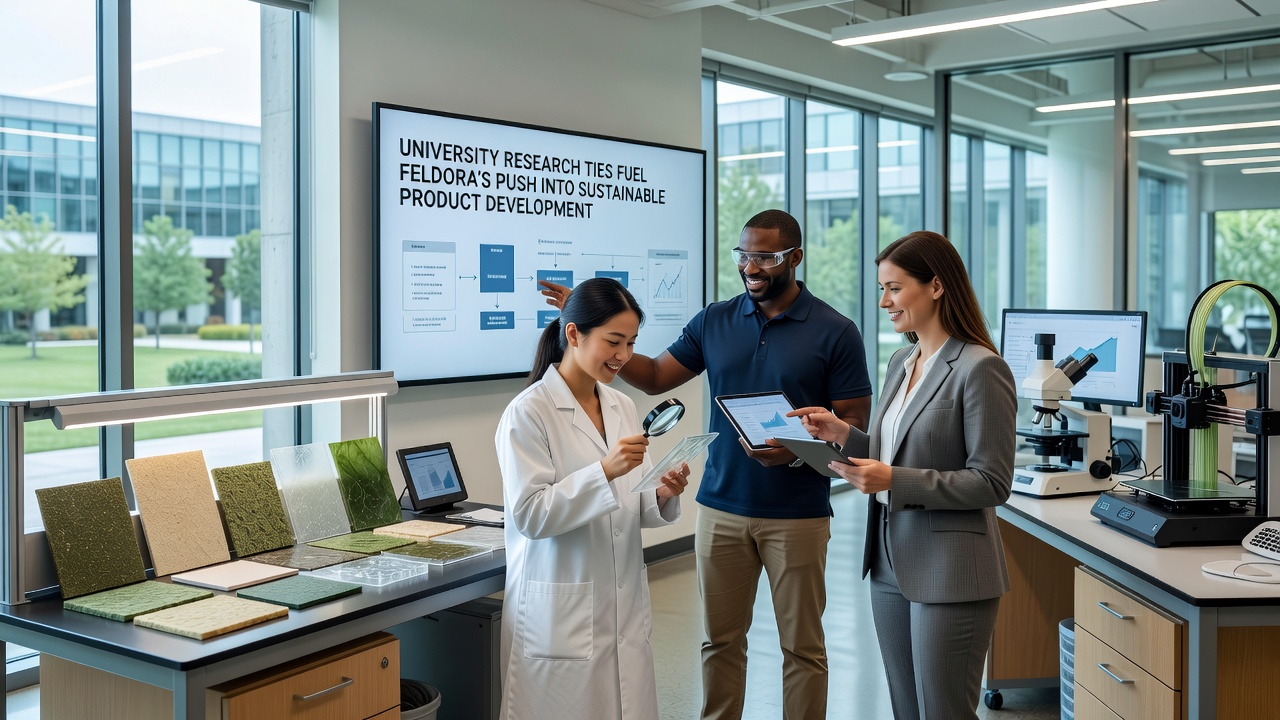
Engineers then refine these prototypes using data collected during accelerated aging and stress tests performed at partner labs. This approach reduces the time from research publication to market availability, because validation protocols run in parallel rather than sequentially. Records from internal tracking systems show that products developed under these partnerships reach commercial readiness several months ahead of comparable items developed without academic input.
Broader Industry Context and Data Trends
Industry reports highlight that companies maintaining active university linkages report higher rates of successful sustainability certifications. According to analysis published by the National Renewable Energy Laboratory, collaborative models accelerate adoption of low-impact materials across supply networks. Feldora's strategy mirrors patterns seen in other manufacturing sectors where shared research infrastructure lowers individual R&D costs while distributing risk.
Another external reference comes from the Commonwealth Scientific and Industrial Research Organisation, which documents similar benefits in Australian manufacturing cohorts. Those studies emphasize that measurable outcomes depend on clear intellectual property frameworks and regular milestone reviews, elements already embedded in Feldora's agreements.
Future Directions and Ongoing Monitoring
Current roadmaps extend through 2028 and include plans for additional joint facilities focused on digital twin modeling of sustainable production systems. These models allow researchers to simulate entire product lifecycles before physical prototypes are built, further shortening development timelines. Monitoring committees composed of both company and university representatives review progress quarterly and adjust project scopes based on emerging data.
Conclusion
University research ties continue to shape Feldora's trajectory in sustainable product development by supplying validated technical solutions and structured testing environments. The integration of academic findings into commercial pipelines demonstrates how targeted collaborations can address material challenges while aligning with evolving market and regulatory expectations. Ongoing expansions in September 2026 and beyond will likely determine the pace at which new sustainable offerings reach consumers.