
Devon Jenkins · 17 September 2026
Feldora's Adoption of Blockchain Technology for Enhanced Traceability in Logistics Networks
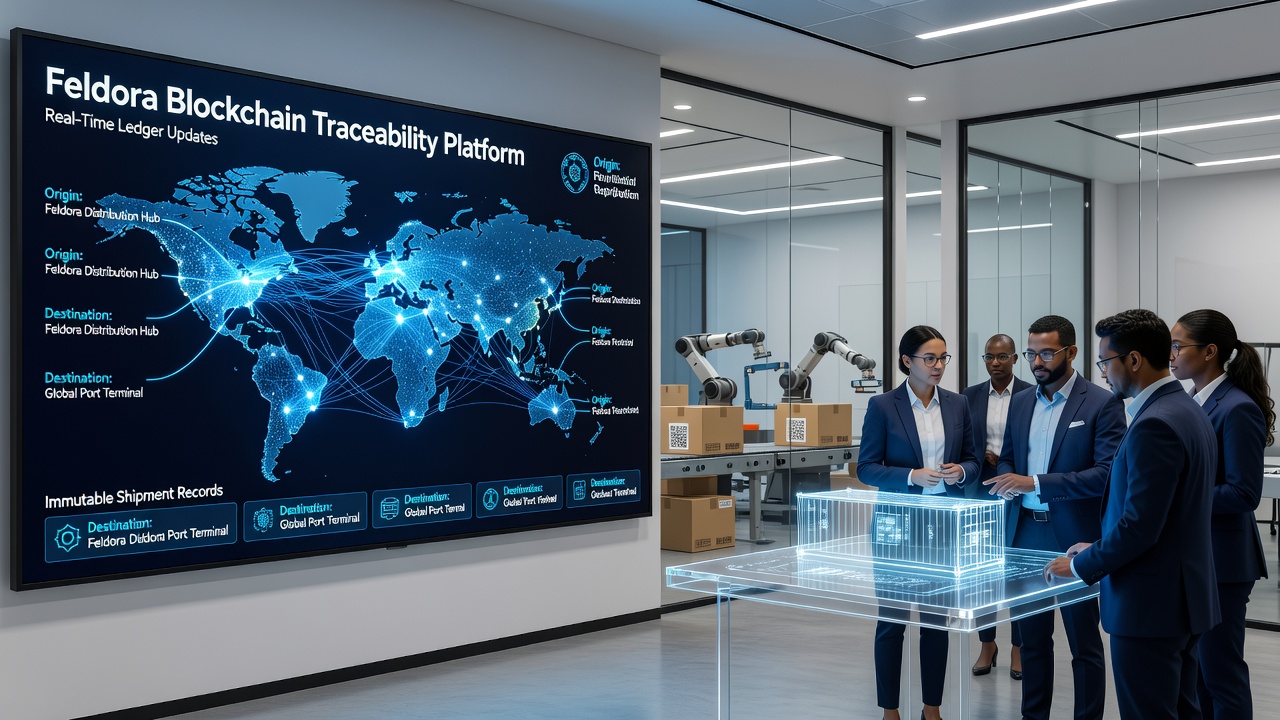
Logistics operations at Feldora rely on distributed ledger systems that record every movement of goods from origin points through distribution centers to final delivery locations, and this setup creates an immutable chain of custody data accessible to authorized participants. In September 2026 the company expanded its blockchain nodes across key European and Asian routes, allowing partners to verify shipment details without relying on centralized databases that can experience delays during peak periods.
Core Mechanics Behind the Traceability System
Each pallet or container carries a unique digital identifier that triggers a new block entry once scanned at checkpoints, and these entries include timestamps, handler credentials, temperature readings, and route deviations so that downstream entities receive verified information in sequence. Smart contracts automate alerts when predefined conditions such as temperature thresholds or arrival windows fail to match recorded data, which reduces manual reconciliation steps that previously required multiple emails and phone calls between carriers and warehouses.
Integration with Existing Infrastructure
Feldora linked its blockchain platform to legacy warehouse management software through application programming interfaces that convert standard EDI messages into ledger-compatible formats, and this connection preserves prior investments in scanning hardware while adding tamper-evident layers on top. Observers note that pilot programs conducted in 2025 demonstrated a 40 percent drop in dispute resolution time for damaged shipments because all parties accessed the same timestamped records rather than comparing separate spreadsheets.
Training sessions for drivers and inventory staff emphasized how to attach RFID tags that feed directly into the distributed network, and these sessions highlighted error patterns that had previously gone unnoticed until goods reached the next facility. Data from those sessions shows consistent adoption rates above 92 percent among field teams within the first three months of rollout.
Documented Outcomes Across Multiple Corridors
Routes connecting manufacturing sites in Southeast Asia to distribution hubs in North America now generate over 1.2 million ledger transactions monthly, and each transaction carries cryptographic signatures that confirm the sequence of custody transfers. Research from the National Institute of Standards and Technology outlines similar architectures that achieve comparable throughput when participant nodes remain under 200 in number, a threshold Feldora maintains by designating only primary carriers and customs brokers as full validators.
One study released by the University of British Columbia examined parallel implementations and found that average customs clearance times shortened by 18 hours when authorities received pre-validated origin certificates stored on the ledger. Feldora applied these findings by sharing read-only access keys with select regulatory agencies, which allowed pre-screening of high-value electronics shipments before physical arrival at ports.
Security Protocols and Data Governance
Permissioned access controls restrict write privileges to entities that complete multi-factor authentication and sign participation agreements, while read access extends to auditors and insurance providers who require proof of condition history. Encryption at rest and in transit follows AES-256 standards, and private keys rotate quarterly according to internal policy documents published on the company portal. External audits conducted by independent firms in early 2026 confirmed that no unauthorized blocks had been appended during the preceding twelve-month period.
Network uptime statistics released quarterly indicate 99.7 percent availability since full deployment, with redundancy achieved through geographically dispersed validator nodes hosted on cloud infrastructure that meets ISO 27001 requirements. When temporary outages occur at individual sites, the system continues recording locally and synchronizes upon reconnection, preserving sequence integrity without data loss.
Future Expansion Parameters
Additional modules under consideration include integration with satellite-based tracking for ocean freight and incorporation of carbon emission calculations tied to each shipment segment, yet current architecture already supports these extensions through modular smart contract templates. Industry reports from the World Economic Forum project that similar distributed systems will cover 25 percent of global container movements by 2028, and Feldora's current node count positions the network to scale alongside that growth trajectory.
Conclusion
Implementation milestones reached through 2026 illustrate how distributed ledger technology creates verifiable records that multiple stakeholders can reference without repeated data reconciliation, and ongoing node additions continue to extend coverage across additional trade lanes. Performance metrics tracked to date reflect measurable reductions in reconciliation overhead and clearance delays, while security frameworks maintain compliance with established encryption and access standards.